
Components working together.
Joists define the main load-bearing direction. Infill blocks sit between them, with a structural topping above. This example uses prestressed concrete joists; not all floors have this configuration.
All prices on this website include VAT. “From” prices depend on floor area and scope.
EFITECNIC / MATERIAL DIAGNOSIS
Understand the floor structure.
Analyse the sample.
Inspection, concrete sampling, on-site phenolphthalein test and laboratory analysis. Information about the cement in the examined element, explained by your building surveyor.
JOSÉ LUIS BLÁZQUEZ ROMERO · CATEB 14.103
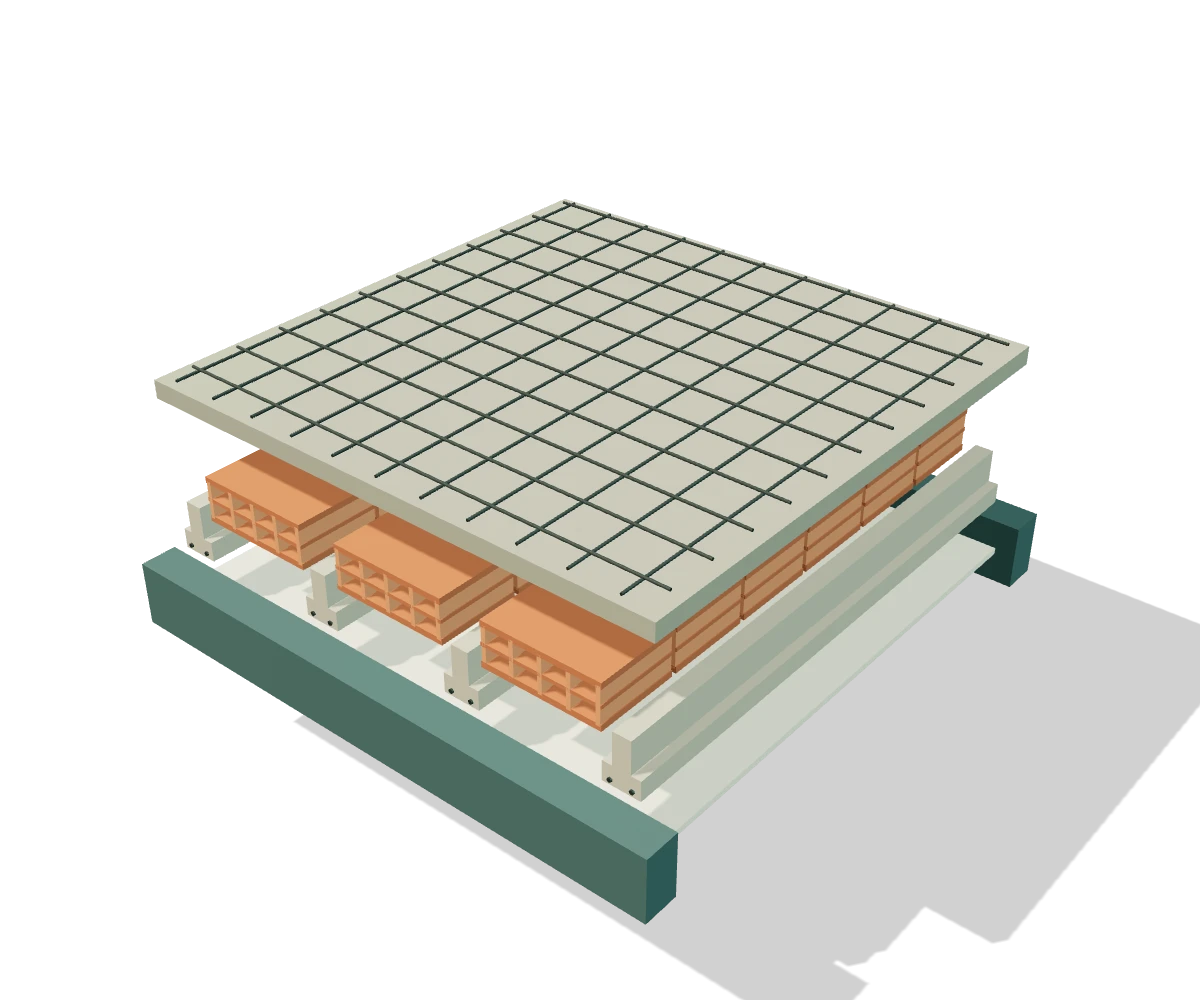
Separate the layers, rotate the section and follow the sample. A visual explanation of the construction system, without attributing a diagnosis to the model.
One-way floor with joists and infill blocks.
Joists define the main load-bearing direction. Infill blocks sit between them, with a structural topping above. This example uses prestressed concrete joists; not all floors have this configuration.
The study focuses on concrete from the selected element. Ceiling plaster and infill blocks cannot replace that sample. Construction type and background are checked during the visit.
The access panel is removed and supports and upper layers hidden to reveal the joist. You can tilt the view. The surveyor selects the actual sampling point without cutting reinforcement; the position shown is illustrative.
The fragment moves out of the joist opening and enlarges. The dashed line indicates its origin; wires remain continuous within the element. The sample is identified before laboratory dispatch. Destructive sampling; repairs not included.
Simplified model, not to scale. The open section and separated layers explain the system; they do not represent the dimensions or procedure of actual opening-up work.
In residential buildings, the usual focus is certain precast concrete joists made with high-alumina cement. A joist being precast or prestressed does not prove it contains that cement.
High-alumina cement's rapid strength development favoured its use in precast construction. Building age and floor type guide the investigation but do not identify the material.
Transformation of hydrated cement compounds can alter concrete porosity and strength. Moisture, temperature and manufacturing conditions influence its progression.
The element, damp signs, cracks, spalling and possible corrosion are examined. Interpretation requires context: damage alone does not identify the cement, and its presence does not automatically mean structural damage.
Technical context: high-alumina cement floor defects — CATEB and structural rehabilitation — ITeC.
The aim is to obtain information about the sampled material. A sample alone cannot establish the condition of the entire structure or replace a full structural assessment.
A sample provides information. Professional judgement gives it context.
The service does not fill or reinstate the opening. Reinstatement must be arranged separately; it must not be assumed that the area can be left without appropriate technical protection.
José Luis visits the property and extracts the sample at the agreed point, after assessing access and sampling feasibility.
Phenolphthalein is applied to a freshly fractured surface. It indicates alkalinity and carbonation; it does not identify high-alumina cement by itself.
The sample is sent to the laboratory for the commissioned analysis. Results and observations are recorded in the report, with their limitations.
Phenolphthalein gives an indicative pH reading in the tested area. Laboratory analysis examines the sample: these are different checks.
Fragment without indicator. The detail shows the wires inside the joist remaining continuous.
Educational diagram, not to scale. The opening and fragment are enlarged; they do not indicate where or how much to extract. Colour does not identify high-alumina cement or measure strength.
Indicates higher alkalinity in the tested area. It does not identify cement type or measure strength.
May be consistent with carbonation and lower alkalinity. Interpretation requires technical context.
Neither reading alone determines structural condition or confirms high-alumina cement.
It is an acid-base indicator. On a fresh fracture, pink or purple reveals a sufficiently alkaline area; no colour change may correspond to reduced pH. It does not provide an exact pH measurement.
Atmospheric CO₂ reacts with cement components and can reduce concrete alkalinity. The indicator helps reveal this change, but its reading depends on the material and test conditions.
The test aims to identify the sample's cement type. As a technical reference, CATEB describes a method based on the BRE oxine test. The method used for your sample must be stated in the laboratory report.
The identification test alone does not measure strength, degree of conversion or safety of the whole floor. No specific laboratory or method is assigned to the job before confirmation.
The sampling point is assessed and the sample extracted. This is a destructive procedure.
On-site phenolphthalein test and dispatch for the commissioned analysis.
Interpretation of results within the agreed scope.
The service does not include filling, closing the opening, plastering or painting. Reinstatement is arranged separately.
We review background, access, permissions and extraction point. Scope and number of samples are agreed.
The procedure leaves an opening or localised material loss. Reinstatement is not included in this service.
The on-site phenolphthalein test is performed and the sample sent to the laboratory.
Analysis results and observations at the sampled point are reported. Timing depends on the laboratory.
VAT, visit, sampling, on-site test, laboratory and report included within the agreed scope.
REQUEST A SERVICE ↗The €350 includes the visit, extraction, on-site phenolphthalein, dispatch, laboratory analysis and report within the agreed scope. Closing the opening, repairs and painting are excluded.
If results suggest further investigation, this is agreed as a separate assignment. No additional checks are carried out without agreeing their scope.
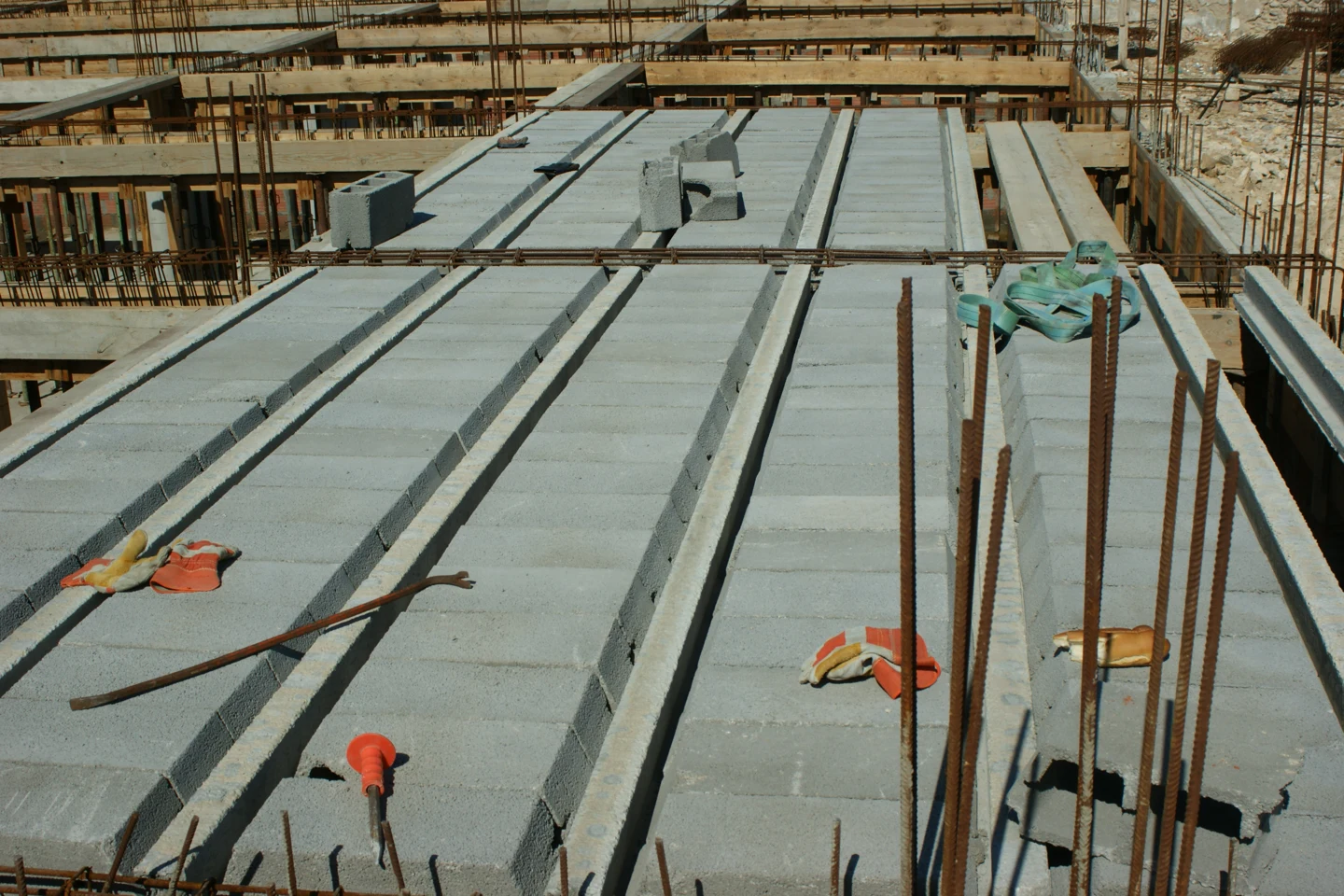
Prestressed joist installation illustrating the construction type. This is a third-party photograph, not an EFITECNIC project.
No. Precasting or prestressing does not identify the cement used. The floor type is reviewed and, where appropriate, a sample of the element analysed.
No. High-alumina cement identifies a material type; aluminosis refers to deterioration processes requiring technical assessment. Structural damage must not be inferred solely from the cement's name.
The colour change helps interpret concrete alkalinity and carbonation at the tested point. It does not measure mechanical strength or independently confirm the presence or absence of high-alumina cement.
Sampling is destructive and leaves an opening or localised material loss. Size and location depend on assessment of the element and planned analysis.
Closing, repairs, plastering, painting and replacement finishes are not included. The customer must arrange this separately and follow appropriate technical instructions to protect the affected area.
VAT, visit, sampling, on-site phenolphthalein test, dispatch, laboratory analysis and report within the agreed assignment. Any additional samples or investigation are scoped before proceeding.
No. Analysis concerns the sampled material. Variation within the building or observed defects may require further checks and a separate study.
Timing is confirmed when arranging the assignment and depends on the laboratory. No immediate result is promised during the visit.
Appropriate authorisation and access are required. If the point affects communal or structural elements, conditions are agreed before starting.
Sources consulted · 20/10/2026
High-alumina cement and defects · CATEB ↗Technical inspection guide · ITeC ↗
Complete the details so your request can be reviewed. This local version validates fields but does not transmit information or confirm an appointment.
VAT, visit, sampling, on-site test, laboratory and report included within the agreed scope.
Personal service from José Luis Blázquez Romero.
Building surveyor · CATEB 14.103.
Extraction and reinstatement are separate jobs. Closing or repairing the area must be arranged separately.
Complete your request without leaving this page. Specify the service or bundle, property details and how to contact you.
REQUEST A SERVICE ↗Opens within this page. If you used a bundle selector or configurator, enter your selection in the form.
José Luis Blázquez Romero, EFITECNIC building surveyor, CATEB member no. 14.103, with over 15 years of experience. Serving Barcelona, Viladecans, Gavà, Castelldefels, L'Hospitalet de Llobregat, Cornellà de Llobregat, Sant Boi de Llobregat, Esplugues de Llobregat and Sant Feliu de Llobregat. Provide the municipality and property details to arrange the visit and scope.

I explain the sampling scope, laboratory analysis and report results.
Building surveyor · CATEB 14.103
Barcelona and Baix Llobregat
Tell me what your home needs and which municipality it is in.
We will open WhatsApp so you can message EFITECNIC.OPEN WHATSAPP ↗